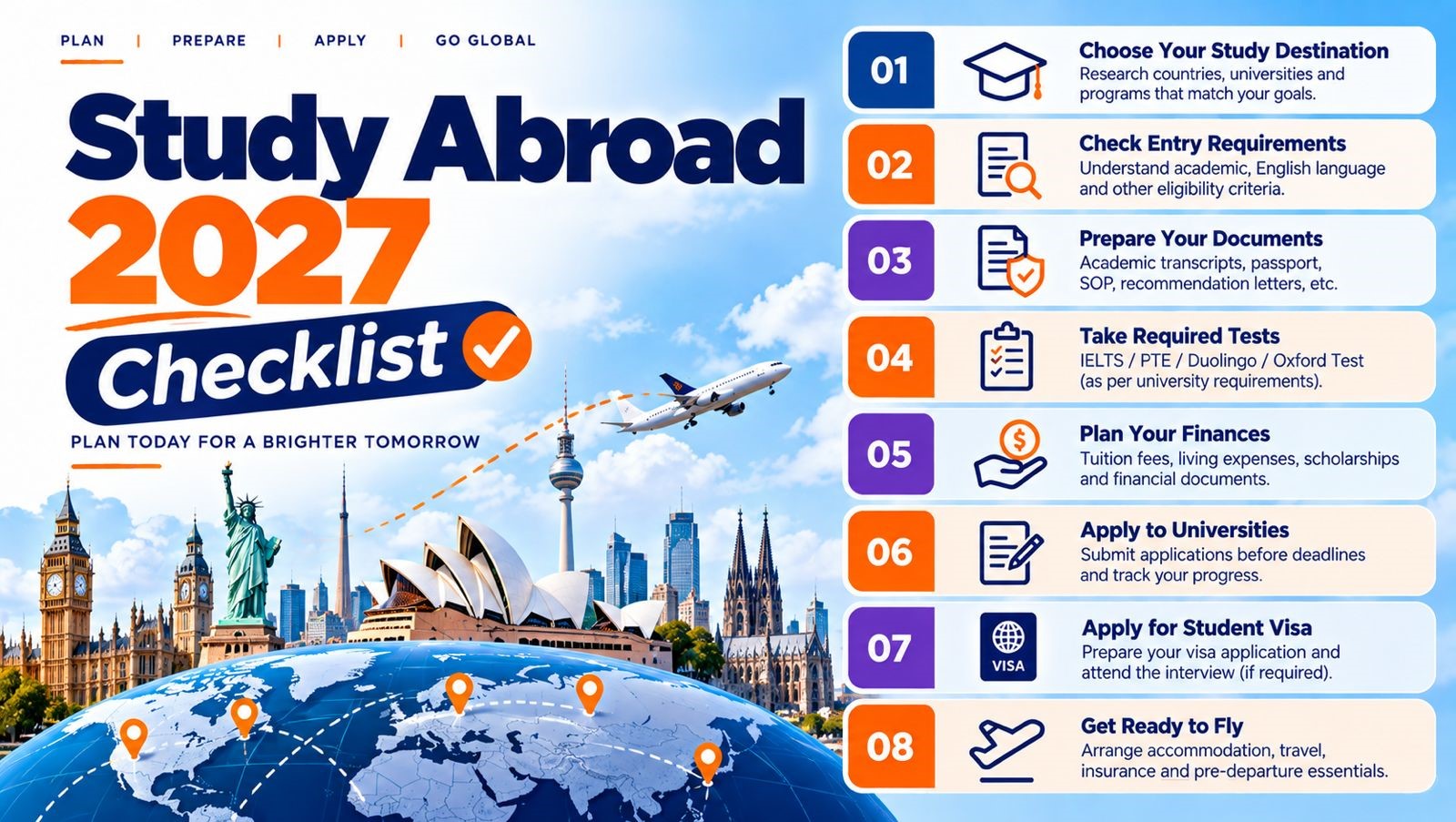
Are you planning to pursue your degree overseas in 2027? Whether you are aiming for the Spring 2027 or Fall 2027 intake, an early start is the single best way to ensure a seamless transition. The international admissions cycle would require a careful consideration across university research, standardized testing, financial planning, and student visa processing.
This comprehensive 2027 study abroad checklist breaks down the roadmap into phases, highlights the essential document checklist and essentially provides a guide for your strategy.
Study Abroad Timeline for 2027 Intake
In order to avoid missing critical university deadlines or visa processing windows, structure your prep work 12 or 15 months before your target semester begins.
Phase 1: Research, Strategy and Shortlisting (12-15 Months Out)
- Define Goals and Study Destinations: Identify your core academic interests, career goals, and destination countries (e.g., US, UK, Canada, Australia, Europe).
- Establish a Budget: Evaluate the tuition fees, mandatory health coverage, accommodation costs and regional living expenses.
- Shortlist the Universities: Shortlist around 5 to 8 institutions categorized into Safety, Match and Reach/Dream options based on historical acceptance rates and entry criteria.
Phase 2: Standardized Exams and Academic Preparation (9-12 Months Out)
- Language Proficiency: Register for and sit through recognized language tests such as IELTS Academic, TOEFL iBT, PTE Academic or Duolingo English Test.
- Standardized Entrance Test: Prepare for the required graduate or undergraduate admissions exams (GRE, GMAT, SAT or ACT).
- Official Academic Records: Request for an official academic transcript, mark sheets, and provisional degree certificates from the current or previous institutions.
Phase 3: Application Documents and Submissions (6-9 Months Out)
- Statement of Purpose (SOP): Draft, refine and customize your SOP or personal statement for each of the universities, highlight the academic background, research interests and long-term goals.
- Letters of Recommendation: Obtain 2 to 3 recommendation letters from your professors or professional supervisors, who can speak about your capabilities.
- Academic Curriculum Vitae: Format a clean, well structured academic resume or CV that highlights work experience, history of publication and extracurricular achievements.
- Scholarship Applications: Apply for institutional funding, merit-based scholarships, and government grant schemes ahead of early-bird deadlines.
Phase 4: Admissions, Financial Verification and Documents (3-6 Months Out)
- Review and Accept University Offers: Compare conditional and unconditional offer letters and make a deposit of tuition to secure admission.
- Prepare proof of financial support: Bank statements, official loan sanction letters, fixed deposit receipts or blocked account statements in order to meet the visa maintenance requirements.
- Obtain Visa Eligibility Papers: Obtain visa eligibility papers from your host institution (e.g., Form I-20 in the US, CAS statement in the UK, or Provincial Attestation Letter/PAL in Canada).
Phase 5: Student Visa Processing and Pre-Departure Preparation (1-3 Months Out)
- Process Visa Application: Fill out applications online, book biometrics appointments, and participate in consular interviews (as needed).
- Secure Student Housing: Book into university halls of residence, Purpose-Built Student Accommodation (PBSA) or verified private rentals.
- Health Checks and Travel Arrangements: Request and/or provide all required medical checks, obtain travel insurance and book flight tickets.
Expert Advice for a Successful 2027 Application Cycle
- Take exams 10-12 months before intake: to provide enough time to retake exams if you do not achieve competitive scores.
- Investigate and customize your SOP for each program: Admissions officers assess your exact match with their program, faculty and campus resources, don’t use a general template.
- Check Local Visa Policies: Immigration regulations, post-study work visas and proof-of-funds requirements evolve rapidly from country to country and by visiting official government sites you can always see what is required.