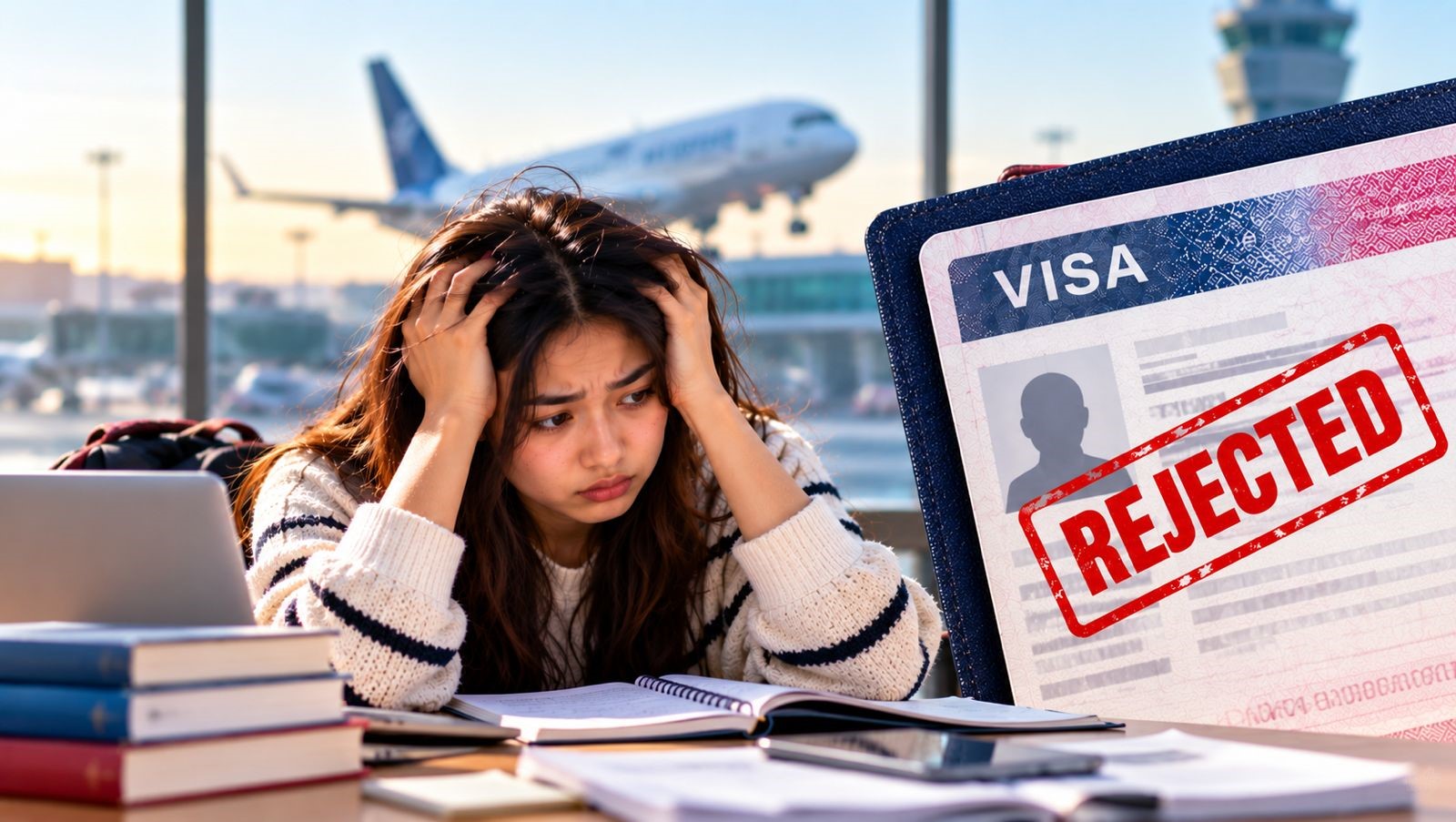
Securing the admission letter from a global university is a major milestone, but it is only half the battle. The final hurdle and often times the most challenging is getting your student visa approved. The immigrations departments across the major destinations like the US, UK, Canada, Australia and European nations have tightened their scrutiny. With tighter enrollment caps, strict, genuine student assessments, and adjusted cost of living proof thresholds, navigating the visa process would require precise preparation.
This guide provides the most common reasons for student visa refusals and provides strategies to ensure that your visa gets approved.
1. Insufficient or Unverifiable Financial Proof
Why it Causes Refusal
The immigration authorities must be convinced that you can cover tuition fees, accommodation and living expenses without resorting to unauthorized employment or facing financial hardship.
The common financial red flags include:
- Unexplained Large Deposits: A sudden, large sum deposited into the account shortly before filing raises suspicion of funds parking or temporary loans.
- Financial Thresholds: Failing to account for updated cost of living requirements set by host countries.
- Unverified Sponsors: Submitting the financial support from distant relatives without a clear legal documentation or proof of income source.
How to Avoid Them
- Secure Your Funds: Ensure that your money remains untouched in an approved financial institution for the required holding period (which is typically 28 to 90 days applying).
- Provide a Clear Paperwork: Include tax returns, salary slips, or property sale agreements to justify any recent large deposits.
- Overfund Your Account: Maintain a 15-20% buffer above the minimum statutory requirement to protect against exchange-rate fluctuations.
2. Student Assessment and Study Plan
Why it Causes Refusal
A generic or a poorly written Statement of Purpose (SOP) response is one of the leading causes of refusal. The visa officers look for a logical connection between your past education, your chosen degree, and your future career goals.
The red flags include:
- Mismatch of Course: Applying for a degree which is unrelated to your academic or professional background.
- Academic Backtracking: Enrolling into a program at a lower qualification level than a degree you already hold.
- Plagiarized SOPs: Submitting generic statements copied from the online templates or agency draft kits.
How to Avoid Them
- Demonstrate Logical Progression: State why this specific course and institution are necessary for your career trajectory.
- Explain the Academic Gaps: Provide a clear documentation for any gaps in your timeline.
- Write an Original Statement: Detail the specific modules, faculty members or university facilities that attract you to the program.
3. The Failure to Prove Ties to Your Home Country
Why it Causes Refusal
The visa framework rules such as Section 214(b) of the US immigration and nationality states that student visas are temporary non-immigrant visas. Officers must believe that you intend to return home after the graduation.
How to Avoid It
- Economic Ties: Showcase clear post-graduation career opportunities, existing job offers, or family business inheritance in your home country.
- Showcase Social and Family Ties: Outline strong family connections, community ties or property/asset ownership back home.
- Focus on Local ROI: You need to show that the salary bump that you receive upon returning home will justify your international education investment.
4. Poor Visa Interview Performance
Why It Causes Refusal
For the destinations that require an in-person or failing to communicate clearly can lead to an immediate rejection.
The common interview pitfalls include:
- Memorized or robotic answers that generally sound insincere.
- Inability to explain why you chose a specific university over the local options.
- Uncertainty regarding the course modules, tuition fees or living costs.
How to Avoid It
- Know Your Application: Memorize the exact details that are submitted in your visa application forms.
- Practice Answers: Focus on the past, present and future model and explain what you studied previously, why you chose this program, and how it enables your future plans.
- Be Natural and Confident: Speak clearly about your financial backers, course content and career ambitions without relying on scripted templates.
5. Incomplete, Inconsistent or Fraudulent Documentation
Why It Causes Refusal
Inconsitencies across the documents, such as the mismatched names on academic certificates and passports, missing pages or unverified translations which can cause administrative delays or rejection. Submitting fraudulent documents can lead to permanent travel ban.
How to Avoid It
- Conduct an Audit: Verify that your name, date of birth and personal details match across all the academic, financial and civil documents.
- Use Certified Translators: If your original documents are not in the host country’s official language, obtain certified, stamped translations.
- Follow Official Checklists: Cross-reference your document submission packet against the latest requirements on official government immigration portals.