Completing +2 or high school is a major achievement for a student as it marks the beginning of the student’s journey towards higher education. Studying abroad in countries such as Australia, Canada, UK and the US would require the student to pass the IELTS exam as it is one of the major steps towards studying in English speaking countries. So, how long does it take exactly? Well, the answer might not be that simple as it can take from anywhere between 1 to 6 months. The exact time is based on the student’s English proficiency baseline, his target score and how dedicated and consistently he/she can practice.
1. Preparation Based on Your Proficiency
- AdvancedorUpper-IntermediateProficiency:If the student has graduated from an English medium school, and the English content is regular to them then they might need around 4 to 8 weeks of practice. The main focus for the students then would be to get familiar with the test formats, master time management and honing module specific strategies.
- Intermediate Proficiency: If the person can understand and communicate basic to moderate level of English but might struggle with complex grammar, advanced Vocabulary or speaking and listening tasks, then they might take around 8 to 12 weeks of practice.
- Beginner/Basic Proficiency: If they struggle with every aspect of English including the fundamental such as grammar, sentence formation and reading comprehension then it takes around 4 to 6 months of practice as they will need to build upon their English skills and practice test strategies.
2. Determining Your Target Score
Many universities set a required target score in order to join the university which can be anywhere between 6.0 and 7.0.
- CanadaandAustralia:They typically require a band score of 6.0 and 6.5 overall with no band less than 6.0.
- UK: The undergraduate programs in the UK also require 6.0 to 6.5 depending upon the university and their program.
- USA: Some competitive programs require a score of 7.0 or higher.
Note: It is recommended to always try to aim for a higher score rather than trying to meet the minimum requirements.
3. Recommended Monthly Study Plan
This 3-month strategy can offer a balanced approach towards success for high school graduates:
1st Month: Foundation
- Take an official mock test from British Council or IDP in order to establish the baseline score.
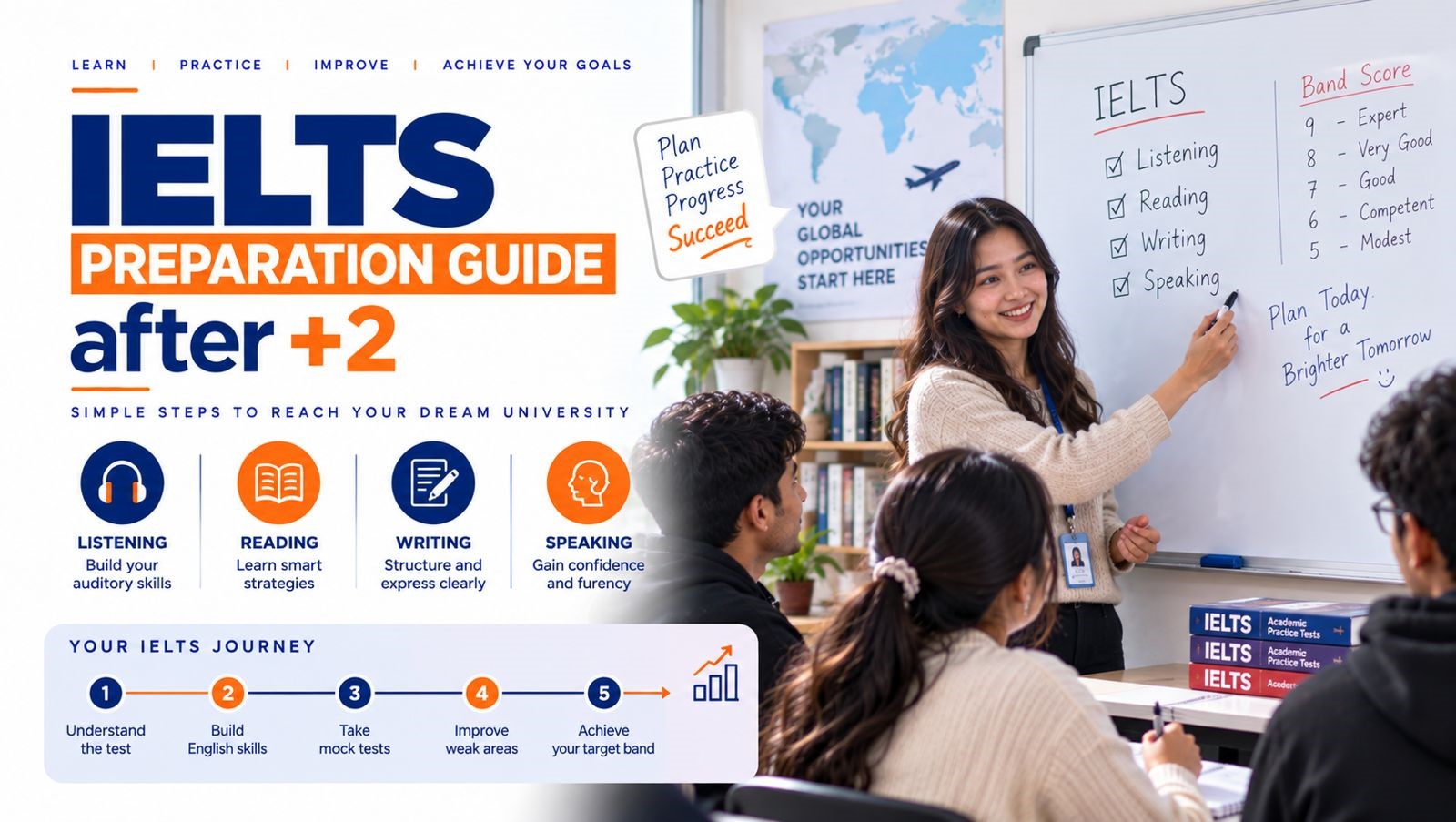
- Understand the IELTS test structure, which comprises of listening (40 mins), Reading (60 mins), Writing (60 mins) and speaking (11-14 mins).
- Focus on enhancing the vocabulary and analyzing fundamental grammar (tenses, complex structures and passive voice).
2nd Month: Module Training and Strategies
- Listening:Try to listen to various accents such as British, Australian, and North American with the help of podcasts and without subtitles.
- Reading: Master key techniques such as skimming, scanning and identifying main ideas under the timed conditions.
- Writing: Practice and learn the specific formats for Task 1 (describing graphs/diagrams) and Task 2 (essay writing).
- Speaking: Speak aloud on common IELTS topics such as hobbies, education, and technology. Record yourself and review fluency, vocabulary and pronunciation.
3rd Month: Mock Tests
- Complete full length mock test at least twice a week.
- Analyze the errors and identify any weak spots.
- Focus on managing the time especially in tasks such as Reading and Writing sections.
4. Some Key Tips to Maximize the Preparation Time
- Study Consistently, Don’t Study Intensely: 2 – 3 hours per day is more effective than 8 hours per weekend.
- Immerse Yourself in English: Make your daily news, articles, podcasts or YouTube consumption in English.
- Don’t Memorize: Memorized or “canned” answers are easily detected in both Writing and Speaking and can earn lower grades.
- Professional Feedback: Your essays should be read by a qualified IELTS tutor, and you should have mock speaking interviews so that you are able to spot micro-errors you would be unable to spot on your own.