
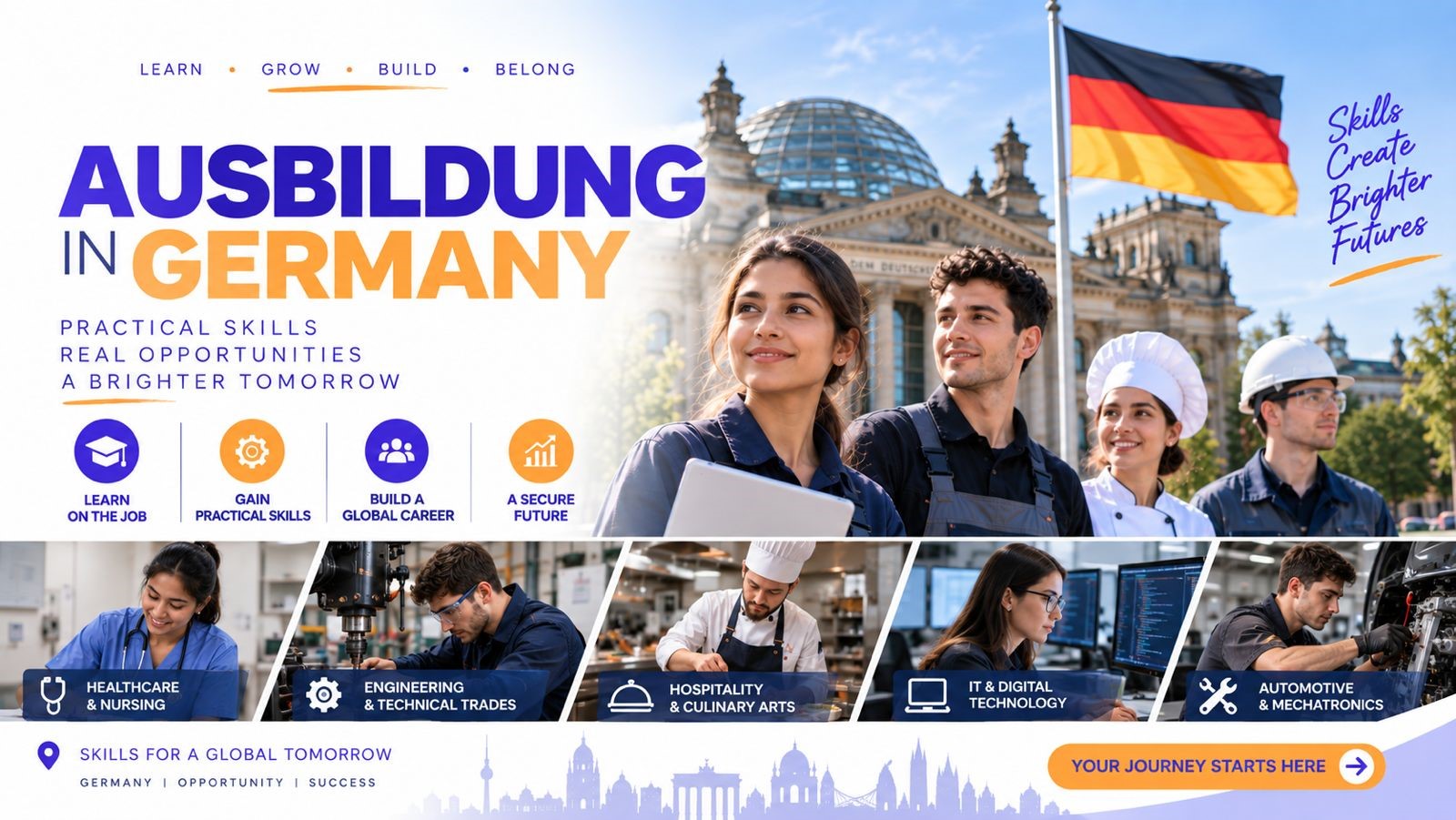
Ausbildung is a dual vocational program in Germany which combines hands-on practical work at a Germany company (around 60-70% of the time) with theoretical classroom education at a vocational school. One big advantage that international students have, more importantly those applying from Nepal is, there are no tuition fees. The trainees in fact will receive a monthly stipend directly from their employer throughout their program.
Fees and Financial Requirements
- Fees: €0, the host company pays you the monthly allowance.
- Blocked Account Requirement: The students who’s monthly Ausbildung stipend is €1,048 or higher, do not need a Blocked Account for the visa. If it is lower, then it is mandatory to deposit the remaining difference into a blocked account before applying for the visa.
Popular Courses and Pay Scale
Ausbildung has programs which typically last for 2 to 3.5 years. Monthly stipends increase with training year.
| Field | Course | Average Monthly Stipend (Euros) |
| Healthcare | General Nursing | €1,200 – €1,650 |
| Information Tech | Software/System Integration | €1,000 – €1,400 |
| Engineering | Mechatronics Technician | €1,100 – €1,450 |
| Automotive | Automotive Technician | €850 – €1,350 |
| Hospitality | Hotel and Restaurant | €900 – €1,300 |
| Logistics | Logistics Specialist | €900 – €1,250 |
Colleges and Educational Structure
You do not need to apply directly to a college or university for an Ausbildung. Instead, a vocational contract needs to be secured with a German company. Once hired, the company handles the enrollment process in the state-run vocational school which is associated with their industry.
Career Opportunities and Pay Scale after Graduation
After passing the final examinations (e.g., IHK or HWK), the student earns an officially recognized state qualification. Most of the host companies will offer full-time positions to their apprentices directly after the graduation.
- Starting Salary: €2,200 – €3,800 per month (NPR 389,580-NPR 672,911), varies depending on the sector.
- Career Growth: After gaining work experience, the student can further pursue advanced certifications or transition into a full bachelor’s degree program with advanced credit transfers.
- Permanent Residence: After working full-time for 2 years post-graduation the individual is eligible to apply for permanent settlement in Germany.
Eligibility Requirements for Applicants from Nepal
- Academic Qualification: Completion of Grade 12 (+2) with a valid transcript and school leaving certificate.
- Age Limit: Generally, between 18 and 30 years old.
- German Language Proficiency: B1 Level Certificate is required for technical, hospitality and trade roles, B2 Level Certificate is highly preferred for Nursing and direct patient-care fields.
Application Process from Nepal
- Learn German: Complete levels A1 through B1/B2 at an accredited language center in Nepal and secure an official Goethe/ÖSD certificate.
- Create Application Papers: Create your CV and cover letter into standard German formats (Tabellarischer Lebenslauf and Motivationsschreiben).
- Apply to Employers: Apply on the job sites in Germany (Ausbildung.de, Make-it-in-Germany, StepStone) or on the company websites that are targeted.
- Pass Interviews: Conduct interviews online with potential employers on Microsoft Teams or Zoom.
- Get Your Training Contract: Sign Your Trainingsvertrag (Training Contract) and get approval from The Federal Employment Agency (Bundesagentur für Arbeit).
- Apply for Visa: Schedule a visa appointment at the German Embassy in Kathmandu.
Documents Checklist
- Passport with a validity of 1 year.
- Ausbildung Contract.
- Language Certificate (Either B1 or B2).
- Academic Certificate.
- CV and Cover Letter written in German.
- Proof of Accommodation.
- Health Insurance.
- Financial Proof (Only if stipend falls below statutory minimum requirement.