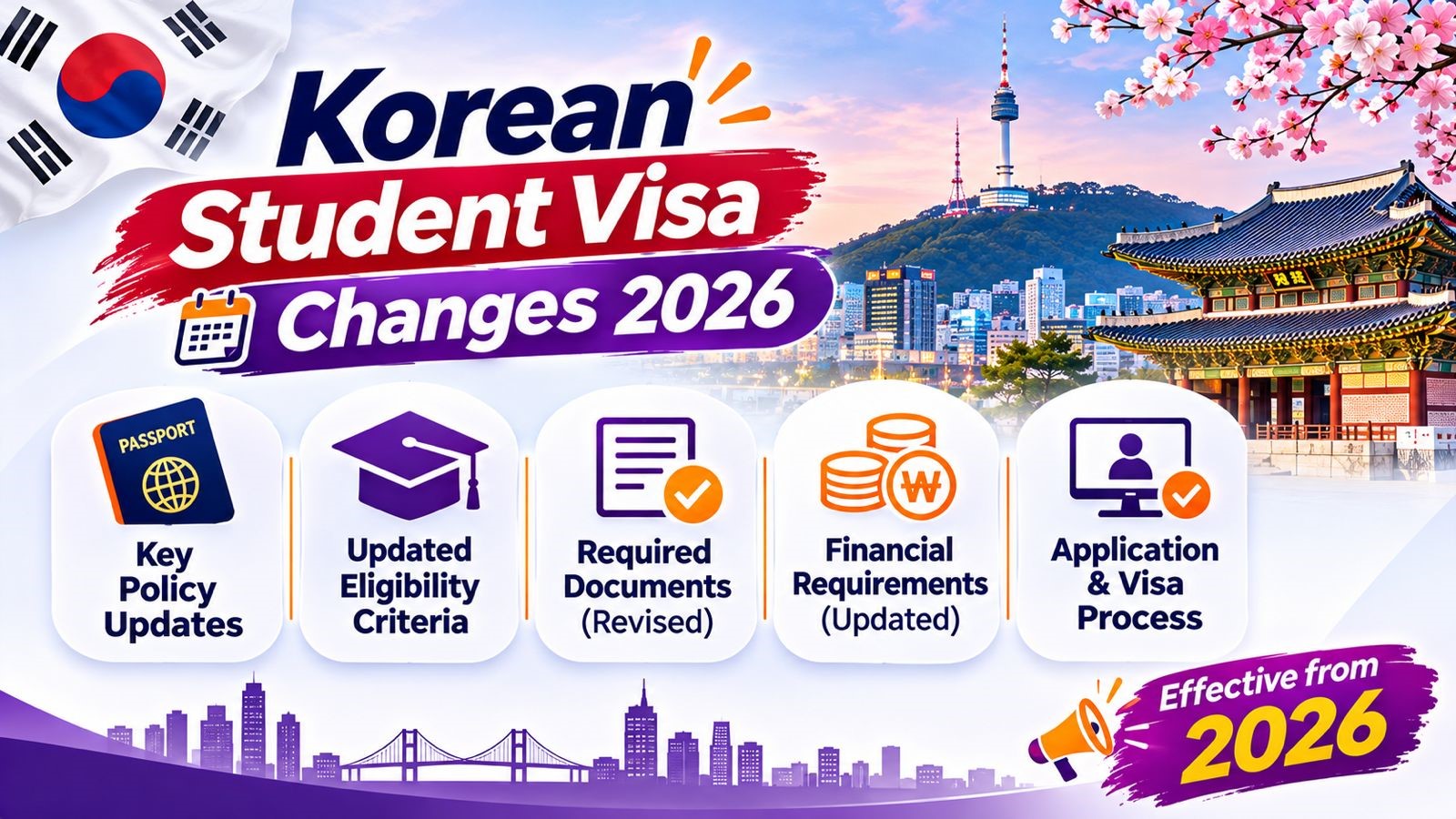
The international student visa rules can feel overwhelming, but staying informed is the key to planning a smooth academic journey in South Korea. The South Korean Ministry of Justice and Immigration authorities introduced updated policies under their international education strategy which is aimed at tightening the compliance while rewarding language proficiency.
The guide below breaks down the changes and how it impacts the students applying from Nepal.
What has changed?
- Language-Linked Financial Proof Incentives
- Rule: South Korea is streamlining the financial documentation requirements based upon the Korean language proficiency.
- Key Update: The applicants holding the verified TOPIK Level 4 or higher can qualify for relaxed bank statement and financial proof requirements during the visa applications and renewals.
- Extended Part-Time Work Rights
- Rule: The standard D-2-degree students are able to work up to 20-25 hours per week during their teaching periods and unlimited hours during their semester breaks.
- Key Update: The work permissions are now directly tied to the Korean proficiency. Higher language levels unlock expanded work hours, while the student’s language skills will also face restricted work permits.
- Redesigned Post-Graduation Job-Search Visa
- Rule: The graduates can transition to a D-10 Job Seeking Visa to search for corporate employment in South Koreaa.
- Key Update: The maximum extension length (up to 3 years) is now tiered on the basis of language skills and regional study. The graduates with strong Korean skills get full 3-year windows, whereas those without proficiency will receive shorter 1-to-2-year caps which is managed via points system.
- Technical Career Pathways
- Rule: A direct immigration transition pathway has been introduced connecting D-2 study status with F-2 Residence Visas for graduates in STEM, manufacturing, and specialized technical fields.
- Consular Document Verification Schedules
- Rule: The Embassy of the Republic of Korea in Nepal operates under the strict document verification slots.
- Key Update: Group university verification submissions have been replaced by the individual verification appointments, which would require the applicants to track embassy slots closely.
Direct Impact on Nepali Students
- The Language Skills Are Essential Rule: In order to attain success in the long term, Korean language proficiency (TOPIK) is no longer optional. Having passed TOPIK Level 3 or 4 before departing Nepal provides greater part-time work eligibility, easier financial documentation evidence and longer post-study work visas.
- Document Verification Timelines in Nepal: In Kathmandu, Korean Embassy document verification slots are booked far in advance, so students in Nepal need to get their documents (NOC, Ministry approvals and consular verification) months before they are ready to enroll in universities.
- Financial Planning and Vacation Savings: Nepalese students can work full-time in the summer or winter breaks, so they can earn legally (at the minimum wage of KRW 10,030 per hour) to cover tuition and living expenses without those limits. But a formal Part-Time Work Permit (Form S-3) from local immigration is required after receiving Alien Registration Card (ARC) by the students.
- STEM and Technical Job Opportunities: Nepali students pursuing Master’s or Bachelor’s degrees in engineering, IT, or manufacturing can leverage the new K-TECH pathways to transition directly to work and residence visas post-graduation.